What a Credit Score Under 700 Really Means and How to Fix It

A credit score under 700 can lead to higher interest rates, fewer lending options, and more expensive borrowing across auto loans, mortgages, and credit cards. This guide explains what’s holding your score back and how to fix it using simple, high-impact steps like lowering utilization, improving payment history, and disputing errors. It also shows how tools like Dovly AI can help you track and improve your credit faster.
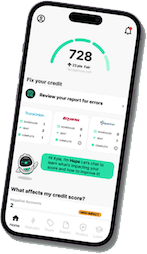
A credit score under 700 costs money. It affects the interest rate on your car loan, your mortgage eligibility, and whether lenders offer you their best terms or something decidedly worse.
This guide breaks down exactly what a sub-700 FICO score means for your wallet, what factors are holding it back, and how a concrete plan with Dovly AI can help you push past it.

What a Credit Score Under 700 Actually Costs You
The gap between a 680 and a 740 is not symbolic. Every major financial goal costs more money when lower scores are on the table. Better credit is not a vanity metric. It is a dollar amount.
Auto Loans
Auto lending is the clearest window into score-based pricing. According to Experian’s Q1 2025 State of the Automotive Finance Market, prime borrowers (661–780) average 6.70% APR on new car loans. Near-prime borrowers (601–660) average 9.83%.
On a $35,000, 60-month auto loan, that rate difference adds roughly $3,200 in total interest paid.
Prime borrowers access competitive rates that near-prime borrowers simply cannot. On a car loan, better credit translates directly to dollars. It is one of the fastest ways to save money over the life of a financing agreement.
Mortgages
Mortgages run on credit score thresholds. Many lenders use them to determine which loan types a borrower can access at all:
- 580+: FHA loans (3.5% down payment)
- 620+: Most conventional loans
- 700+: Jumbo loans (most lenders require 680–700 as the minimum credit score)
- 740+: Best rates across all mortgage products
The cost of sitting below 740 is real. MyFICO’s loan savings calculator estimates that moving from a 680 to a 760 credit score saves approximately $29,000 in total interest on a $300,000, 30-year mortgage.
Debt to income ratio and other factors also influence approval — many lenders weigh income, assets, and employment history alongside credit. But the score is always the first screen.
Personal Loans and Credit Cards
For personal loans, minimum credit requirements from many lenders sit around 680 for the most favorable terms. Below that, borrowers face higher interest rates and tighter loan ceilings.
Credit cards follow the same pattern. Most unsecured credit cards are accessible below 700, but the products that earn cash back at top rates, offer 0% intro APR on large purchases, and reduce interest charges on balances typically require a higher score.
Credit card issuers tie your APR directly to your credit score. The better your score, the better your chances of qualifying for their top products.
Understanding Credit Score Ranges (And Where “Under 700” Actually Falls)
Your credit score is a three-digit number between 300 and 850. The FICO credit score ranges below show exactly where 700 sits.
FICO Score Ranges at a Glance
| Score Range | Category |
|---|---|
| 800–850 | Exceptional |
| 740–799 | Very Good |
| 670–739 | Good |
| 580–669 | Fair |
| 300–579 | Poor |
A score under 700 lands in either the Good tier (670–699) or Fair (580–669). Both face higher rates than borrowers at 740 and above. A good credit score opens doors — but the best products sit higher up these score ranges.
FICO is the dominant credit scoring model, used by over 90% of top lenders. The average credit score in the U.S. is 715 per FICO’s 2025 data. A sub-700 score falls below that line.
Your score is built from data held by Equifax, Experian, and TransUnion. Scores can differ between bureaus, so pulling your credit report from all three gives you the clearest picture.

Why Your Credit Score Is Under 700 (The Real Causes)
Many factors affect your credit score, but most people under 700 are held back by the same issues.
Late Payments and Missed Payments
Payment history is 35% of your FICO score. Late payments and missed payments stay on your credit report for up to seven years and negatively impact both your approval odds and the rates you’re offered. Experian data shows 52% of people at a 700 FICO score carry at least one late or missed payment on file.
High Credit Utilization
Credit utilization ratio is 30% of your FICO score. It measures how much of your available credit you’re currently using. A $3,000 balance on a $10,000 credit limit equals 30% credit utilization. High credit usage shows lenders you’re reliant on revolving credit. Keep it below 30%, and aim for under 10% for the best score impact.
A Short Credit History Limits Your Score
Credit history length is 15% of your FICO score. A longer credit history works in your favor. If your credit accounts are relatively new, that is a structural disadvantage. Closing old accounts only makes it worse.
Too Many Hard Inquiries Can Drag Your Score Down
Every credit application triggers a hard inquiry. Per FICO, a single inquiry drops most scores by fewer than five points, but too many hard inquiries compound quickly. Space out new credit applications deliberately.
A Thin or Unbalanced Credit Mix
Credit mix is roughly 10% of your FICO score. Lenders prefer to see both revolving credit and installment accounts, like a personal loan or car loan, alongside credit cards. Fix payment history and credit utilization first.
How to Get Your Credit Score Over 700: A Concrete Plan
The factors covered above map directly to the fixes. Here’s where to put your energy, in order of impact.
Make On-Time Payments Your First Non-Negotiable
Set every account to autopay for at least the minimum. You need to pay something on time, every month. A 24-month streak of consistent on-time payments actively rebuilds the picture lenders see.
Experian Boost can also help: it adds on-time payments from phone bills, streaming services, and utilities to your Experian credit file. For thin profiles, it adds real data lenders wouldn’t otherwise see.
Cut Your Credit Utilization Below 30% (Then Push for 10%)
This is the fastest lever you have. Utilization resets every billing cycle, so a paydown today can show up in your score in 30 to 60 days. Pay down your highest-utilization cards first, and ask your card issuer for a limit increase. More available credit with the same balance lowers your ratio automatically.
Pull Your Credit Report and Dispute Any Errors
A 2021 Consumer Reports study found 34% of people had at least one error on their credit report. Pull yours from all three major credit bureaus at AnnualCreditReport.com. If you find an error, file a dispute with the bureau reporting it. They’re required to investigate within 30 days. This step costs nothing and can move your score more than anything else on this list.
Keep Old Accounts Open
Closing a card reduces your available credit and can shorten your credit history length. Both hurt your score. If you have an older account with no annual fee, keep it open and use it occasionally. Don’t let good credit habits get undone by closing accounts.
Be Strategic About New Credit Applications
Space out credit applications. Multiple hard inquiries in a short window compound quickly. If a home purchase or car loan is on the horizon, don’t open new accounts in the six months before you apply. One exception: rate shopping for a mortgage or auto loan within a 14- to 45-day window typically counts as a single inquiry under most credit scoring models.
How Long Does It Actually Take to Cross 700?
It depends on what’s holding your credit score back.
Utilization drops are the fastest mover. If high balances are your main issue, paying them down can lift your score within one billing cycle: sometimes 30 to 60 days.
Dispute resolutions take about 30 days once you file. If an error is confirmed and removed, a score change can follow quickly after.
Payment history takes longer. A late payment doesn’t disappear when you catch up. Its impact fades over time, but a consistent track record of on-time payments over 12 to 24 months is what starts to neutralize it.
Credit history length is the slowest-moving factor. You can’t fast-forward it. Keeping existing accounts open is the main lever here.
A higher credit score isn’t a destination you reach once. It’s what happens when good credit habits compound over time.

Conclusion: How Dovly AI Helps You Get There
Crossing 700 opens real doors. A better interest rate on your next car. A mortgage you actually qualify for. Credit cards that earn instead of just cost. That’s the real return on getting your credit score where it needs to be.
Dovly AI’s free credit monitoring covers all three bureaus, spots what’s pulling your credit score down, and disputes inaccurate items on your behalf. Fix what’s wrong. Build what’s missing. Protect what you’ve worked for.
Frequently Asked Questions
Is a credit score below 700 bad?
What credit score do you need for a $400,000 house?
What level is a 600 credit score?
Can I get anything with a 700 credit score?


COMPANY
CREDIT HELP
LOCAL PAGES
COMPARE OPTIONS
© 2026 Dovly, Inc. All rights reserved.